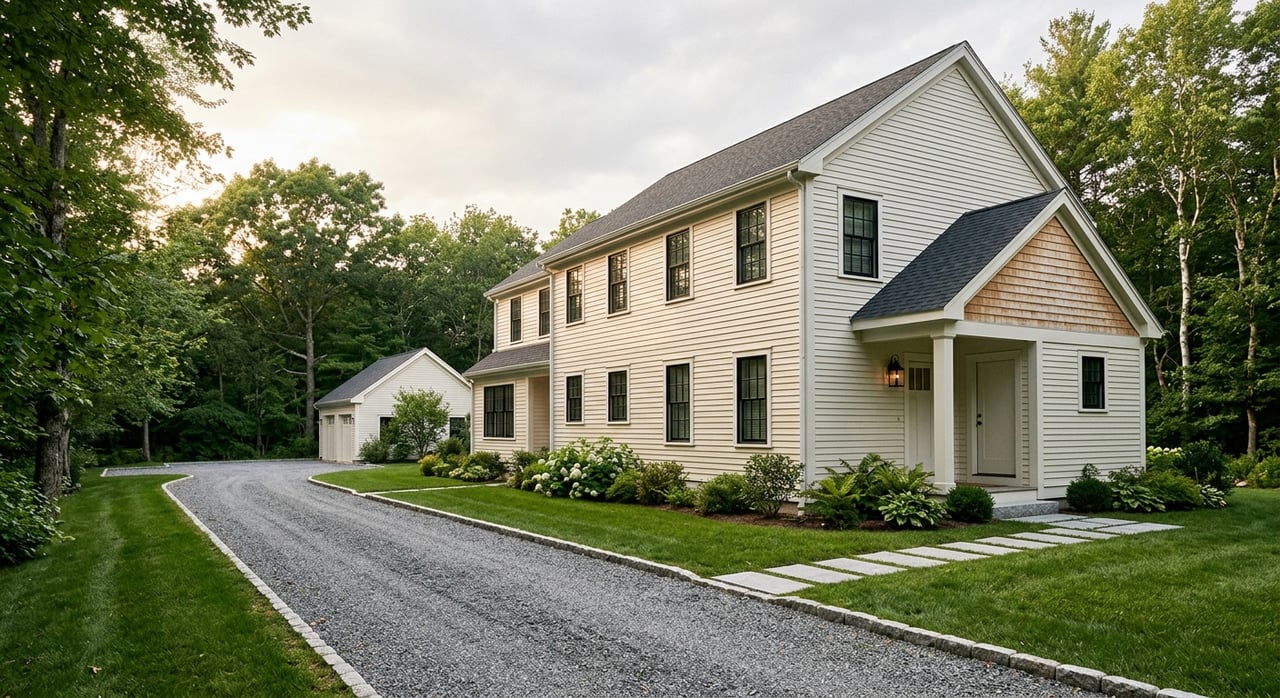
Are you trying to decide whether life in Gorham would feel better close to the village or farther out where lots are larger and the pace is quieter? It is a smart question, because Gorham is not one-size-fits-all. If you understand how in-town and rural living differ in layout, housing, services, and daily routine, you can focus your home search on the part of Gorham that truly fits your life. Let’s dive in.
How Gorham Is Set Up
Gorham covers about 50.6 square miles and has roughly 18,300 residents, so the feel of town changes quite a bit depending on where you are. The local choice is often less about whether you want to live in Gorham and more about which part of Gorham works best for your day-to-day routine.
The town’s comprehensive plan draws a clear distinction between village areas and rural areas. Gorham Village Center is centered around the Square near Main Street and South Street, extending east toward Elm Street, while Little Falls Village Center runs along Gray Road from the river to Tow Path Road.
The same plan describes the Rural Area as a broad northern section stretching from the Buxton line across Fort Hill to the Presumpscot River and up to North Gorham, plus smaller rural pockets in South Gorham and on Longfellow Road. There is also a suburban middle ground in areas like Burnham Road, the northern fringe of Gorham Village, Dingley Springs, Barstow Road, and parts of Flaggy Meadow-Narragansett.
What In-Town Living Means
In-town living in Gorham usually means being in or near the village center, where development is more compact and daily errands may feel simpler. The zoning in these areas supports a broader mix of housing and uses than many buyers expect.
In the Urban Residential District, allowed housing types include one- and two-family homes, apartment buildings, multifamily housing, accessory apartments, and bed-and-breakfasts. In the Gorham Village Center District, residential units can also be part of mixed-use buildings alongside small local retail, service, and office uses.
That mix shapes how the area feels. The village-center code is designed to support a pedestrian-oriented environment, with parking placed to the side or rear of buildings so the street edge stays more compact.
What Rural Living Means
Rural living in Gorham is built around larger lots, more spread-out development, and a different land-use pattern. If you picture more separation between homes and a quieter setting, this is likely the version of Gorham you have in mind.
The Rural District allows homes, farms, roadside stands, sawmills, mineral extraction, agritourism, dog kennels, and other rural uses. That range reflects the working-landscape character that still exists in parts of town.
The zoning standards also make the difference easy to see. Rural lots generally require 60,000 square feet per dwelling unit and 200 feet of frontage, and a single-family lot in a conventional subdivision cannot be smaller than 40,000 square feet.
Comparing Lot Sizes and Housing Types
One of the biggest differences between in-town and rural living in Gorham is how much land usually comes with the home. That matters not just for privacy, but also for upkeep, layout, and the overall feel of the neighborhood.
In the Urban Residential District, the minimum lot size is 10,000 square feet in watered and sewered areas and 20,000 square feet in unsewered areas, with 80 feet of frontage. In the Village Center District, mixed-use buildings have no minimum lot size, while residential uses follow Urban Residential standards.
By contrast, the Rural District uses much larger lot standards. That means buyers looking for a compact property with less land to manage may lean toward in-town areas, while buyers who want more outdoor space may prefer rural sections of Gorham.
Townwide, Gorham’s housing stock is still mostly detached and owner-occupied. Census data show 6,834 housing units, an 81.5% owner-occupied rate, about 83% single-unit homes, and a median owner-occupied home value of $460,900.
Daily Convenience and Town Services
Your day-to-day routine can feel very different depending on where you live in Gorham. For many buyers, convenience is one of the main reasons to compare village and rural settings carefully.
The Municipal Center is located at 75 South Street near Gorham Village and houses town offices including assessing, code, finance, town clerk, planning, the school department, and the town manager. Police, fire, and rescue are located at 270 Main Street, which reinforces how service-focused the village area is.
Gorham also operates a sewer system in the Village and Little Falls areas, with billing handled by the Portland Water District. In practical terms, homes in or near those areas are more likely to connect to town services than rural properties.
That can affect both lifestyle and expectations. Some buyers prefer the simplicity of being near town services, while others are comfortable trading that convenience for a larger lot and a more spread-out setting.
Getting Around From Each Setting
Transportation is another important part of the in-town versus rural decision. Both settings offer access to the larger Portland area, but the local part of the trip can feel different.
Greater Portland METRO’s Husky Line connects Portland, Westbrook, Gorham, and the USM campuses, and the Town of Gorham notes that the line is open to everyone. The town lists village stops in both directions, including one near Gorham Savings Bank outbound and one near TD Bank by Hannaford inbound.
That makes in-town living more connected to transit options. Rural areas, by contrast, are generally shaped by larger lots and more spread-out uses, so everyday life is typically more car-dependent.
Commutes and Regional Access
If you need to reach nearby communities for work, shopping, or appointments, Gorham stays well connected overall. The question is usually how much you value shaving a few local minutes off the start of each trip.
Typical drive times from Gorham are about 25 minutes to Portland, 8 minutes to Westbrook, 21 minutes to Scarborough, 26 minutes to South Portland, 26 minutes to Saco, and 28 minutes to Biddeford. Townwide data also show a mean travel time to work of 27.1 minutes.
For many buyers, that means both in-town and rural Gorham can support a commuter lifestyle. Village homes may offer a slightly quicker start thanks to their location near the Main Street and South Street corridor, transit stops, and town services.
The Middle Ground in Gorham
Not every buyer wants the village core or the rural edge. Gorham also has suburban residential areas that can offer a useful compromise between the two.
The comprehensive plan identifies places like Burnham Road, Dingley Springs, Barstow Road, the northern edge of Gorham Village, and parts of Flaggy Meadow-Narragansett as suburban residential areas. These areas generally have larger lots than the village but a less land-intensive pattern than the rural core.
If you want more space without feeling too far removed from town, this middle band may be worth a closer look. It can be a strong fit for buyers trying to balance convenience with breathing room.
Which Gorham Lifestyle Fits You?
If you are choosing between in-town and rural living in Gorham, start with your daily habits rather than just the home itself. The best fit usually comes down to how you want your week to function.
In-town Gorham may fit you best if you want:
- A more compact setting
- Closer access to town offices and services
- Potential access to sewer service in village areas
- Nearby transit stops on the Husky Line
- A mix of housing types and possibly a smaller lot to maintain
Rural Gorham may fit you best if you want:
- Larger lot sizes
- More separation between homes
- A quieter, more spread-out setting
- A landscape shaped by rural and working-land uses
- More focus on driving for daily errands and commuting
If you are unsure, it may help to explore the suburban middle areas as well. In many cases, that is where buyers find the best balance between convenience and space.
No matter which part of Gorham you are considering, the right move is easier when you compare location, zoning pattern, lot size, and daily routine together instead of focusing on price alone. If you want help narrowing down which part of Gorham matches your goals, The Scoville Foley Team can help you evaluate your options with local insight and a clear plan.
FAQs
What is considered in-town living in Gorham, Maine?
- In-town living usually refers to homes in or near Gorham Village Center or Little Falls Village Center, where development is more compact and town services are more concentrated.
What is considered rural living in Gorham, Maine?
- Rural living usually refers to the larger-lot areas in northern Gorham, North Gorham, parts of South Gorham, and other pockets identified in the town’s comprehensive plan.
Are lot sizes bigger in rural Gorham than in town?
- Yes. Urban Residential lots can be as small as 10,000 square feet in watered and sewered areas, while the Rural District generally requires 60,000 square feet per dwelling unit.
Does in-town Gorham have more town services?
- Yes. The Municipal Center, public safety services, village-area sewer service, and Husky Line transit stops are centered in or near the village area.
Is Gorham, Maine a good commuter location?
- Gorham functions as a commuter town, with typical drive times of about 25 minutes to Portland and a townwide mean travel time to work of 27.1 minutes.
Is there a middle option between village and rural living in Gorham?
- Yes. Gorham includes suburban residential areas such as Burnham Road, Dingley Springs, Barstow Road, and parts of Flaggy Meadow-Narragansett that sit between the village core and rural areas.